
Ketamine, Health coaching and Functional medicine
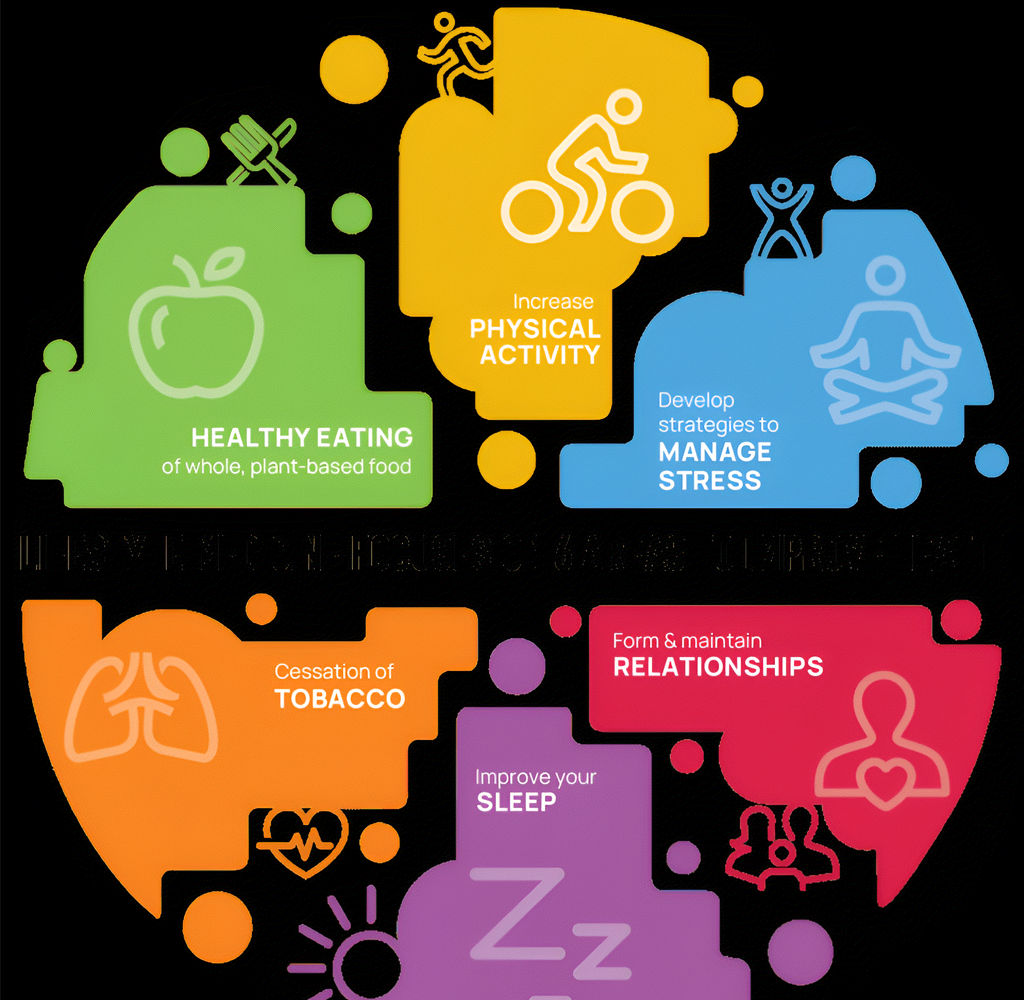
Making Ketamine therapy better with health coaching If your thinking of ketamine therapy, you should know ketamine is not the destination therapy, it opens the door to recovery. As we’ve stated before, ketamine is powerul and unique therapy – but why not not examine all the barriers to wellness? Many diseases are caused or exacerbated by lifestyle, and can often be prevented, arrested, or even reversed! This is referred to as Integrative medicine. Mental health can be similarly impacted by physical activity, diet, and other chronic diseases. Libertas Mind takes an evidence-based approach to help patients regain mental wellness with individualized metabolic testing, nutritional therapies, and dietary interventions. We look at each component of a healthy life: Diet and nutrition, physical activity, restorative sleep, stress management, avoidance of risky substances, activity/movement, and positive social connections! We offer a program providing 1:1 health coaching andworkshops focusing on these pillars of foundational health. Libertas Mind embraces each of these pillars as integral to mental health and wellness. learn more about ketamine contact us for a consult see our other posts
Ketamine
Ketamine for Depression, Anxiety, & PTSD Serving Albany, Saratago county and beyond How does Ketamine work? Ketamine is unlike any other antidepressant, providing relief within hours or days after an infusion and has no long-term effects on appetite, libido, or energy levels. Nearly 70% of patients experience fast and robust relief from Ketamine Infusion Therapy. While the use of ketamine is considered experimental by the FDA for the treatment of mood disorders including depression, our knowledge is rapidly expanding! We have nearly 20 years and several large scale trials suggesting is a powerful and unique antidepressant! How does Ketamine work? By giving our overworked brains a break Ketamine acts as a reboot for your brain and helps your brain create new neurons and pathways. (Which is a really good thing.) A series of low dose infusions of ketamine (at sub-anesthetic doses) lets your brain to rest, reset, and grow new connections, often providing significant relief. Typically, a series of six infusions, plus periodic boosters, will offer relief for one to three months. Is Ketamine safe? YOUR SAFETY AND COMFORT ARE OUR TOP PRIORITY Yes. Ketamine is a safe anesthetic and is listed as an essential medication by the World Health Organization. More than 70 peer-reviewed scientific studies have found that Ketamine Infusion Therapy is a safe and effective treatment for chronic mental health conditions including depression, anxiety, post-traumatic stress disorder (PTSD), and addiction. A board-certified anesthesiologist, highly qualified to administer and care for you during your infusion will monitor your vital signs before, during your treatment, and before you leave. After the infusion, a responsible party must drive you home. The responsible party must be present before the infusion begins. Following treatment, you may feel tired for several hours. FREQUENTLY ASKED QUESTIONS Our Infusion protocols Your safety and success are our priority. Libertas embraces a team approach to your health. Our protocols are evidence based and up to date. You are independently evaluated by a medical and psychiatric provider. You are also paired with a Psychotherapist and/or Health coach for behavioral therapy. These are the core members of your team. Patients must agree to have a responsible party present before the infusion starts who will drive them home. What should I expect during an infusion Ketamine given at low doses induces a “dissociative” or psychedelic state where you may feel dizzy, euphoric, or intoxicated. This feeling goes away within 30 minutes of ending the infusion. Most patients receive six infusions over a period of two to three weeks. While the infusion itself may last 40 or 60 minutes, a typical visit lasts around two hours. During the infusion, you will be seated in a comfortable chair in a private room. We will provide you with a blanket, eye mask, and noise canceling headphones. The nurse will begin your infusion and invite you to relax. Most patients receive six infusions over a period of two to three weeks. Typically, periodic booster infusions are needed. This series provides most patients relief from symptoms of depression for 4-12 weeks. The importance of behavioral therapy Libertas Mind wants your treatment with ketamine to be as healing and transformative as possible. Ketamine is a powerful catalyst for change, but without careful guidance, the therapeutic effect is difficult to sustain. Behavioral therapy plus ketamine, however, not only sets the goals for long-term change, but helps you identify the obstacles preventing growth. We believe therapy is very important to the process, integral in fact to attaining the best outcome. As a policy, every patient considering ketamine treatment with Libertas Mind must be engaged ketamine-assisted psychotherapy. If you do not currently have a therapist, you can see one of our own. We understand there is a shortage of mental health care providers right now. We also have health coaches on our team to provide further support before, during and after treatments. Who should not receive Ketamine infusion treatments? Patients who are actively abusing drugs or alcohol are excluded as candidates for ketamine infusions. A urine toxicology screening is required. Women who are pregnant Patients with uncontrolled hypertension (high blood pressure) Patients with acute cardiovascular disease Patients with recent concussions Any patient who had an unexpected adverse reaction with Ketamine in the past Patients with conditions that cause an increase in their intracranial pressure Patients with schizophrenia Is Ketamine treatment covered by insurance? No. The use of ketamine in treating mood disorders or pain is still considered to be an “off-label” despite the information in the literature and will not be reimbursed by any insurance carriers. However, the therapy does fall under the umbrella of a medical expense and we are able to accept payment from HSA or FSA account
Spravato (Esketamine) FDA approved for treatment resistant depression

Why is SPRAVATO™ unique? SPRAVATO™ or esketamine is the only FDA approved version of ketamine meant for treatment resistant depression (TRD). If you’ve struggled with depression and tried two or more antidepressants without relief, Spravato may be a good choice for you. Below are some of the key points. Spravato is a nasal spray It’s self administered It can only be taken in an office setting Spravato has to be taken with an oral antidepressant What happens when you take Spravato? Because Spravato or esketamine classified by the FDA as a Schedule III drug, like ketamine, itcan cause a number of symptoms listed below. It’s important to have a private room. These side effects typically last 30 -45 m minutes and resolve entirely before your discharged from the clinic. Spravato can cause the following: Dizziness Nausea Spinning sensation Reduced sense of touch and sensation Anxiety Lack of energy Vomiting How long does Spravato™ take to work? Surprisingly quickly within weeks rather than months. Sometimes symptoms improve within 24 hours after your first treatment. Patients take Spravato™ twice a week for the first month. During the second month, patients take it once a week. After that, patients will take it once a week or once every two weeks. How effective is Spravato™? Spravato™ is meant to be used with an oral antidepressant for adults with treatment-resistant depression. In patients who have already tried 3 or more antidepressants the chances of remission (where th symptoms of depression dramatically decrease) is very low – only 15%. Even in this population, Spravato is effective. Research shows that adults who took Spravato along with an oral antidepressant for four weeks had a 50% reduction of depressive symptoms than compared to those who only took antidepressants. What are the requirements for Spravato treatment? Must have a diagnosis of treatment resistant depression or Major Depressive with Suicidal Ideation Must be taking at least one oral antidepressant medication Must be in the care of an outpatient mental health provider The REMS Program requires patients monitoring for at least 2 hours following Spravato administration. Appointments typically take 2.5 hours. To learn more or to schedule an appointment, schedule a consult. More information about spravato request a consult References Meaningful Change in Depression Symptoms Assessed with the Patient Health Questionnaire (PHQ-9) and Montgomery-Åsberg Depression Rating Scale (MADRS) Among Patients with Treatment Resistant Depression in Two, Randomized, Double-blind, Active-controlled Trials of Esketamine Nasal Spray Combined With a New Oral Antidepressant. J Affect Disord. 2021 Feb 15;281:767-775
Ketamine assisted psychotherapy – fundamental to your Ketamine therapy

Finding long term success by combining ketamine with KAP – ketamine assisted psychotherapy Integration Integration is fundamental to our treatment. We’re not just an infusion center – were an integrative mental health facility offering longer term change to our patients. While Ketamine, Spravato and Stellate ganglion blocks are powerful tools to unlock the subconscious and past trauma, it takes guidance and support to get long-term benefit. There is tremendous interest in trying to find better, more innovative ways of extending the antidepressant effect of these therapies. Interesting adjuvant medications taken before and after ketamine infusions may significantly extend the duration of benefit. Some of these drugs include dextromethorphan, D-cycloserine, and rapamycin. There are even devices – that subtlely modulatie vagal tone via gentle electrical stimulation. Simpler, safer, easily available.. The best results thus far are combined cognitive behavioral therapy which is also the simlest, safest and most easily available. Libertas Mind partners with Psychotherapists and Health Coaches pre infusion to set the intentions and goals for your therapy! learn more about ketamine contact libertas mind explore our treatments
Expanding use of Stellate ganglion blocks as a treatment for Depression

A possible new paradigmn in the treatment of depression – Stellate ganglion blocks While the data for Stellate Ganglion blocks (SGB) in treating PTSD is very promising, there may be potential benefits for depression as well. With nearly one-third of patients with major depressive disorder being resistant to available antidepressants, there is a need to develop new treatments for this population. Stellate ganglion block is a procedure used to block sympathetic input to the brain and calm any overactivty. In march of 2023, a pilot study called LIFT-MOOD or Local Injection For Treating Mood Disorders study was completed to investigate the effects of SGB on treating depression. A double-blind, randomized, placebo-controlled pilot trial was conducted with 10 participants randomized 1:1 to either active treatment or placebo (saline) group. This is the first randomized controlled trial (RCT) to date examining the use of SGB in depression. Each participant was offered 2 right sided SGB blocks and their response monitored. What’s the takeaway? The primary goal of the study was to assess the feasibility of using this approach. The authors looked at recruitment, withdrawal, adherence, missing data, and adverse events. This is a fascinating study because it represents a fundamental shift towards viewing depression as a problem in brain connectivity, and the role of the stellate ganglion in mental health. This is also the first study (versus anecdotal report) ever to look at a peripheral nerve block as a treatment for depression. The sample size of the study, a total of 10 subjects, was too low to try and make statements about efficacy. We look forward to a bigger trial with more patients. This pilot trial demonstrated a reasonable recruitment rate and tolerability. Click here to see the article and learn more!
